Product Name:NDSL Net-Oriented Dipole Sonic Logging Tool
|
Type:
|
|
|
producer:
|
|
|
Description:
|
The Net-oriented dipole sonic logging tool is mainly used to solve the problems of sonic logging in soft formations, direct formation shear wave logging, and obtaining formation stress parameters for drilling.
|
OverviewCompositionApplicationTechnical specificationsField Example
The Net-oriented dipole sonic logging tool is mainly used to solve the problems of sonic logging in soft formations, direct formation shear wave logging, and obtaining formation stress parameters for drilling.
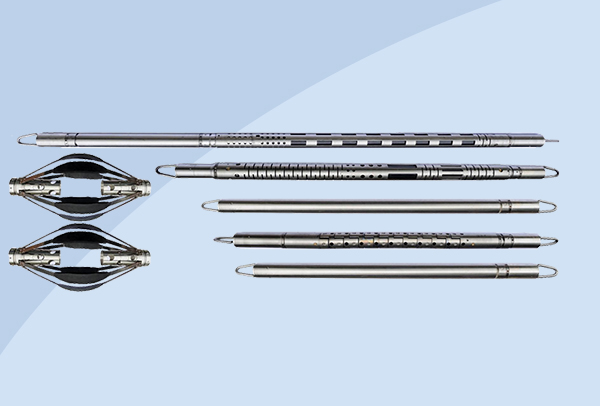
The NDSL tool is mainly composed of five parts: main cartridge, receiving section, sound insulation, transmitting section and transmitting cartridge.
The entire tool adopts the method of sending from the bottom and receiving from the top.
·Obtains the porosity of the target formation specifications.
·Identify gas layer.
·Detection and evaluation of natural fractures.
·Indicates the permeable layer.
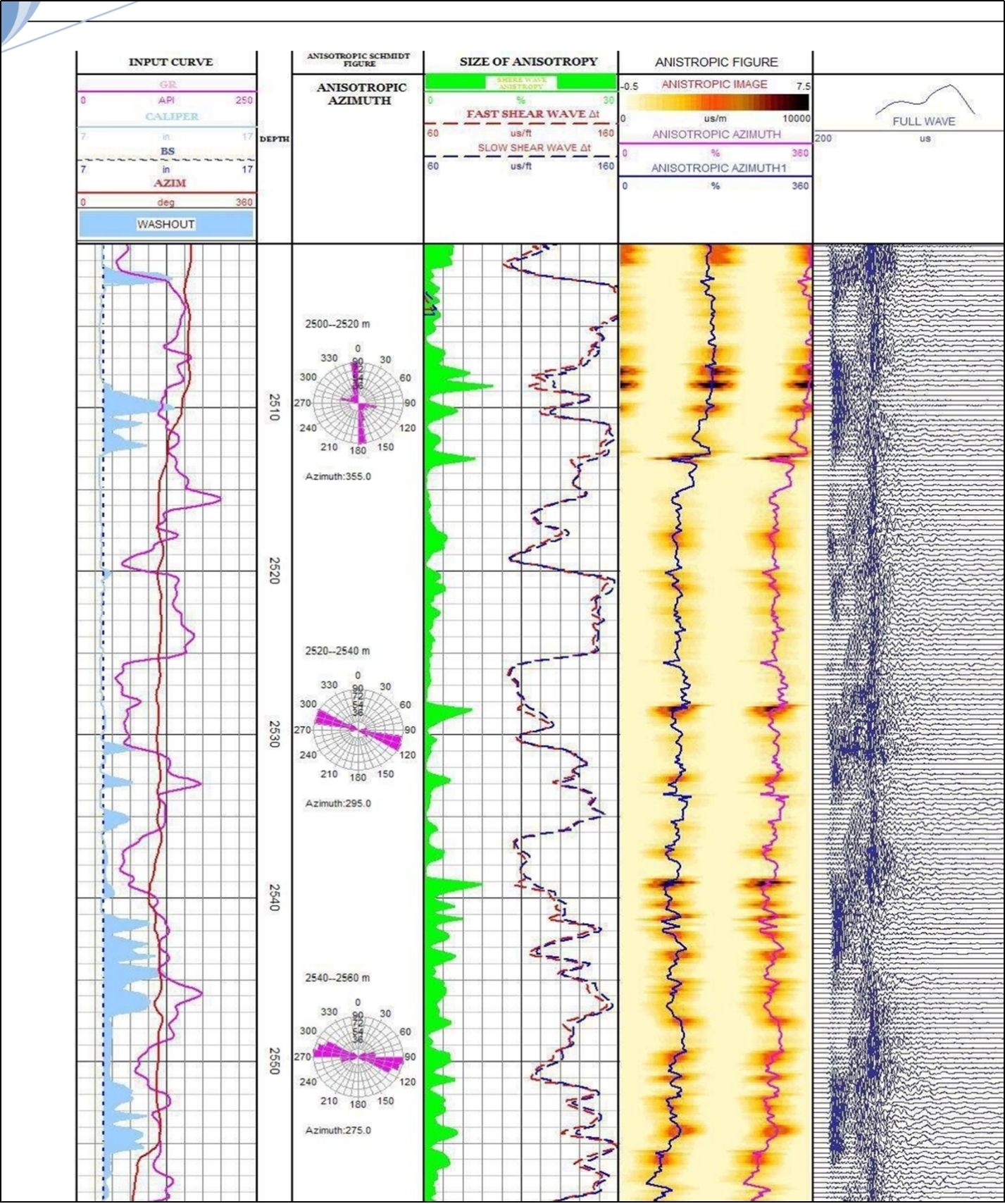
·Determine the anisotropy of the formation.
·Evaluation of rock mechanical properties: obtain Young's modulus, bulk modulus and Poisson's ratio of rock.
The sound system adopts a single-transmitter and 8-receiver structure
Length | 9.7 m | Hole range: | 5 in to 12 in |
Temperature: | 175 ℃ | Max vertical resolution: | 6 in |
Working pressure: | 140MPa | Detection depth: | 1~3ft |
monopole source distance | 8 ft | dipole source distance: | 9 ft |
Receiving cartridge: | In the receiving cartridge, the tool uses 32 independent receiving acquisition channels. The acquisition circuit digitizes the signal of each receiving transducer and acquires it separately. |
Working mode: | The basic cycle of one acquisition of the tool is 1s. In one acquisition cycle, the tool can perform monopole, dipole X and dipole Y acquisition once. The acquisition sequence of the tool is monopole → dipole X → dipole Y. |
Sonic source: | There are two kinds of sonic sources: monopole sonic source and two dipole sonic sources that are cross arranged. The monopole transmitting source is a piezo ring transducer. X and Y dipole transmitting source are at the same depth point. They are piezoelectric triassic piece bender transducer. Both X dipole and Y dipole sonic sources are composed of 2 transducers that are arranged at angle of 180° |
Receiving array: | There are 8 receiving rings, each of which is composed of the 4 dipole receivers that are arranged at 90° in the circumferential direction. Both sonic source signals of monopole and dipole use all the 8 receiving rings as receivers. The distance between two adjacent receiving rings is 6 in |
Transmitter excitation source: | Both monopole and dipole transmitting transducers are activated in way of power driving on the transmit excitation source. That enables the transmitting transducer work under forced vibrating mode to control the transmitting frequency. The main operation frequency of the monopole transmitting source is 8kHz. The dipole transmitting source has three operation frequencies: 1.2kHz,1.5kHz and 2.2kHz, they are selected by program to be applicable soft formation (Δt>120us/ft), medium formation (100us/ft <Δt < 120us/ft) and hard formation (Δt> 120us/ft). |
Provide logs in real time: | Monopole longitudinal wave slowness, dipole X shear wave slowness and dipole Y shear wave slowness, and provide quality monitoring diagrams of the three curves in real time |
Providing logs after precise processing | Velocity analysis, attenuation analysis, Poisson's ratio, rock mechanical properties analysis, anisotropy analysis, fracturing height prediction, Stoneley wave field separation and permeability calculation and many other curves. |